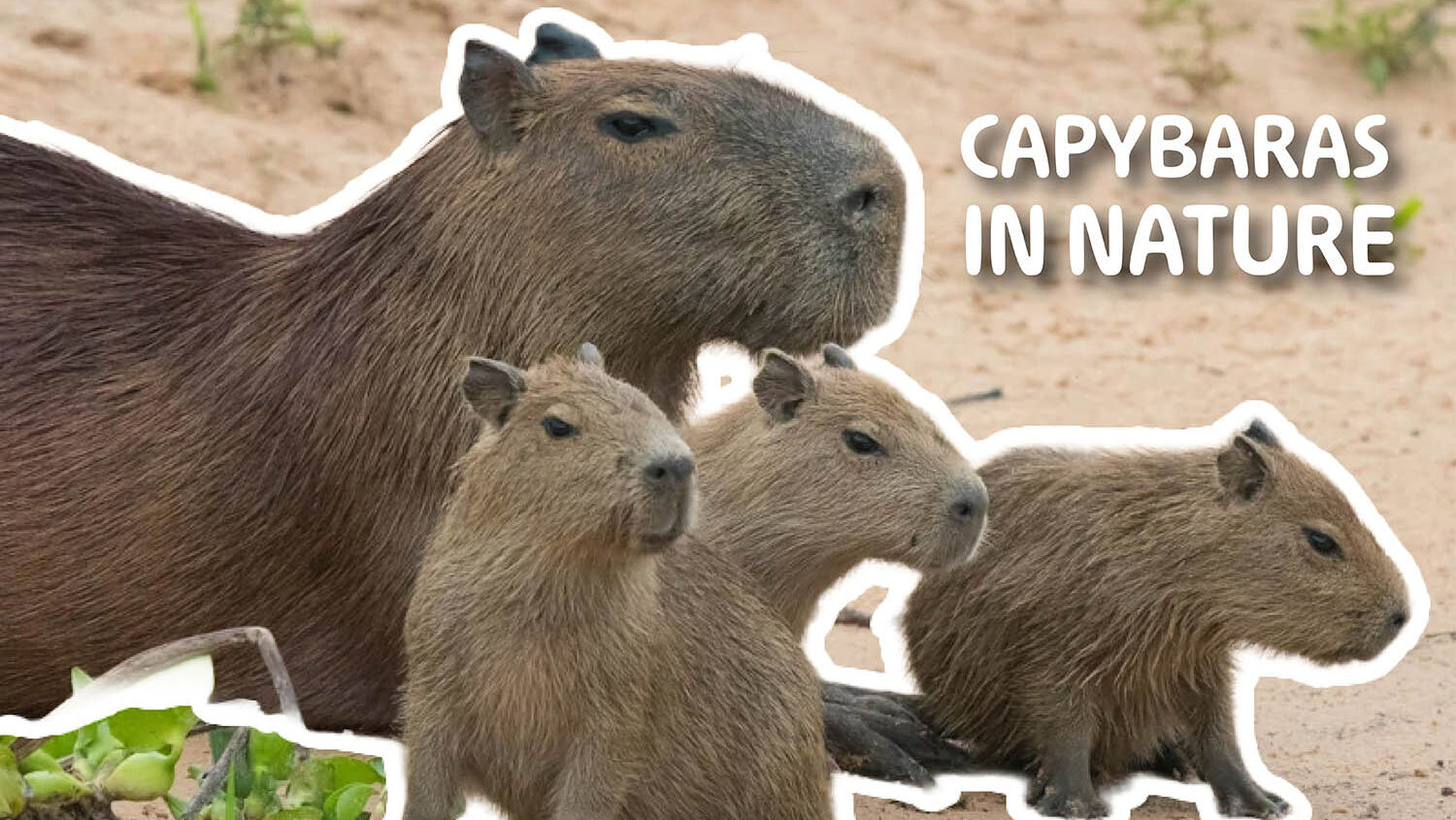


As you may stumble upon one or two of them on Instagram reels, capybaras — scientifically named Hydrochoerus hydrochaeris — are indeed worthy of attention.
Being more than one meter in length and up to 70 kg in mass, capybaras are the world’s biggest rodents. Their gigantic size is obvious compared to house mice, but capybaras are even 60 times more massive than their closest — also adorable — relatives, Guinea Pigs.

The secret behind such a massive body is the plenty of food available in their habitats (No one resists a midnight snack!) in addition to the lack of predators when capybaras’ ancestors arrived in South America. Capybaras, as semi-aquatic mammals, prefer living near lakes and springs. Such water sources provide dense vegetation and food for our herbivores, the capybaras.
Conversely, the survival of capybaras did not rely solely on food. With their unusual diets, behaviors, and evolutionary adaptations from morphological and molecular perspectives, capybaras are more than cute creatures.
Capys’ Observable Uniqueness

While “capybaras” means grass eaters, their diets are way more complex and flexible. When the grass dries up, capybaras depend on grains, melons, reeds, and squashes. In some places, like Brazil, they find their way to crops, eating sugarcane and corn.
Still, our big rodents do not have a complex digestive system nor — like numerous animals — digest grass well. In such cases of maldigestion, you may choose fiber-rich supplements or food containing healthy bacteria. However, capybaras tend to solve the issue more primitively; they eat their feces!
As disgusting as it seems, eating their feces enhances nutrient absorption. This mechanism, called coprophagy, helps them digest food twice and provides beneficial bacteria necessary for digestion. Are you still considering capybaras adorable?
Besides coprophagy, they are indeed adorable and friendly. As herbivores, capybaras do not prey on other animals. Therefore, you may watch some birds, monkeys, and even kids riding capybaras.
Capybaras still have some predators, and their pups are vulnerable to ocelots and harpy eagle attacks. Caimans, Jaguars, and anacondas are natural predators of capybaras. In contrast, you may find a capybara “chilling” around a group of caimans if plenty of food resources are nearby; aren’t they lovely?

In addition to capybaras’ friendliness, their morphology and some behaviors favor them against predators and hunters. The location of their ears, eyes, and nose at the top of their head allows them to dive into the water while watching and sensing the surroundings carefully.

When a capybara senses danger, it can bark or whistle, alerting the rest of the herd. Another interesting fact is that they can hold their breath underwater for up to five minutes, easily escaping predators! What also makes them good swimmers is that they have webbed feet (like those of ducks).
Another behavior favoring them is their flexible mating seasons, depending on the habitat and mate availability, giving up to 8 pups per litter.
Capys On The Molecular Level
With massive bodies, come massive challenges. Body size can be typically thought of as directly related to cancer development. More body size means more somatic cells, more accumulations of mutations, and a greater enrichment of cancer pathways.

However, Richard Peto argued in 1977 that the correlation between the number of somatic cells and cancer incidence is null, known as Peto’s Paradox. The paradox is evident in huge and relatively large animals that rarely or never get cancer, like elephants, bowhead whales, and naked rat moles.